
A Journey Towards Spiritual Unity & Blissful Divinity
RESOURCES
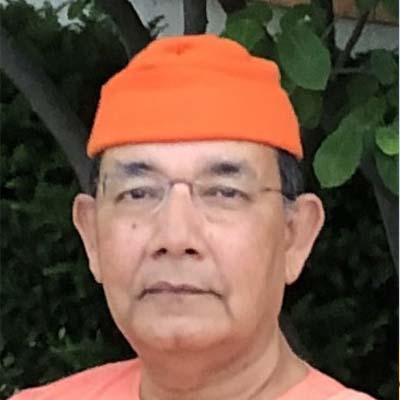
Swami Ishatmananda
Head, Vivekananda Vedanta Society of Chicago
Samanvaya Vedanta Pre-Sri Ramakrishna
DAY 2: Saturday, September 13, 2025, 5:55 – 6:20 pm CDT
Samanvaya Vada: Vivekananda School of Philosophy
Swami Ishatmananda, Minister
Head, Vedanta Society of Chicago
The human being is a meaning-seeking creature.
Victor E. Frankl, in his book on Logotherapy, discussed the “Human Search for Meaning.” The great thinkers of India, known as Munis in Sanskrit, also dedicated themselves to this search and concluded that the goal of human life—peace and happiness—could never be fulfilled unless one found answers to two fundamental questions:
Why does this creation exist?
Who is the Creator?
Due to differing approaches to these same questions, various schools of philosophy developed. Among them, three became most prominent:
Dualism (Dvaita Vada)
Qualified Monism (Vishishtadvaita)
Monism (Advaita Vada)
In the 19th century, Swami Vivekananda propagated a unique philosophy—Samanvaya Vada (Unity in Diversity)—which was practical and suited for the modern world.
The idea of Samanvaya—unity—was always present in the Upanishads, the Bhagavad Gita, the Bhagavata, and other scriptures.
In the Brihadaranyaka Upanishad (4.4.19), it is said: neha nānāsti kiṃcana—“There is no diversity whatsoever in it.”
In the Chandogya Upanishad (6.2.1), we find: ekam eva advitiyam—“In the beginning, there was only Being, one only, without a second.”
There was no disagreement among thinkers about this unity. The differences arose in explaining the process of creation.
How could the One without a second become the many? Philosophers differed on this point, and so different views developed: Dualism, Qualified Monism, Monism, and Absolute Monism.
Wherever there is a thesis, there is bound to be an antithesis. Debates continued for centuries. A synthesis was necessary.
Bhagavan Sri Ramakrishna offered that synthesis to the world through his disciple, Swami Vivekananda.
Both Sri Ramakrishna and Swami Vivekananda were Advaitins. Advaita has two distinct characteristics:
Direct mystical experience of non-dual Reality
A systematic philosophy
Bhagavan Sri Ramakrishna realized the Ultimate Reality, called Brahman, and transcending even that Jnana (Knowledge), he reached the state of Vijnana—the application of that knowledge in daily life.
His disciple, Swami Vivekananda, initially followed the path of Dualism. Then he tried to understand the formless aspect of God through the Brahmo Samaj. Eventually, he found his anchor in Advaita through a sudden experience, received by the grace of his Guru.
One day, Sri Ramakrishna explained to him the presence of the One in everything—puja utensils, temple doors, a cat, and even the holy image of Goddess Kali. All, he said, were One Consciousness.
Naren (Swami Vivekananda) expressed his disagreement—“Even the utensils?!” Students of Swami Vivekananda’s life know what happened next. The Guru touched him, and the disciple had the Advaitic experience—which lasted for three days.
Later, through intense spiritual practice, Swamiji himself realized the ultimate truth. At Kakrighat in Almora, in August 1890, after a profound meditation, he declared: “I have just passed through one of the greatest moments of my life. Here under this peepul tree, the greatest problem of my life has been solved. I have found the oneness of the Macrocosm with the Microcosm. In this microcosm of the body, everything that is there in the macrocosm exists. I have seen the whole universe.”
The question of spirit and matter is age-old. In the Bhagavata, we find that King Parikshit asked the great sage Shukadeva: “Honorable Sir, how does the Atman, which is spirit and non-material, come to have a body that is material?”
The sage replied: “O King! Except in terms of the inherent power of the Lord, it is not possible to explain how the Self can have a body!”
Taking a cue from Shukadeva, Shankaracharya strongly established the Theory of Maya to explain the apparent multiplicity of creation. Swami Vivekananda’s philosophy also rests on the concepts of Brahman, Atman, and Maya.
In one of his London lectures, Swamiji said—like a true Vedantin: “(People ask) how the one Reality became many. The answer to this question is Maya Vada. In reality, the One has not become many. It is only a superimposition.”
His reference was to the Chandogya Upanishad (8.3.2)—“covered by ignorance.”
Swami Vivekananda explained:
Prameya = Object = Brahman
Pramata = Knower = Jiva
Pramana = Means of Knowledge = Shruti
A philosopher is also expected to explain the three Tattvas:
Jiva (the individual soul)
Jagat (the universe)
Ishvara (God)
Vivekananda based his epistemology (Pramana) on direct realization and the truths found in the Upanishads.
To explain what a Jiva is, he quoted from the Katha Upanishad: “The Self inside all beings, though one, assumes a form in respect to each shape, and (yet) it is outside.” (KU 2.2.9)
The individual soul is considered to be Consciousness reflected on the ego.
Brahman is pure, unchanging Consciousness. The higher dimension of Atman is called Brahman. Brahman is the qualitative and quantitative expansion of the individual Atman.
Swami Vivekananda understood that the highest and most perfect system of philosophy is not a single school of thought but the sum total of all philosophies, each providing a different view of the same Reality. This is what is known as Vivekananda’s Samanvaya-vada.
The same sun, seen from different places and angles, appears different—but in reality, it is the same sun.
Accepting the essential oneness of Creator (Brahman) and Creation (Jiva), Vivekananda gave special emphasis to the human being.
In the Bhagavata (11.9.28), we find: “Brahman projected this universe—first the cosmic, then the organic, at various levels of evolution. Yet He was not satisfied. Why? He thought that in order to rediscover Himself, He needed someone like Him—and then He projected the human form.”
Swami Vivekananda, in his philosophy, emphasized this idea—the importance of the human being.
“The divinity of man is in a potential state. The goal is to actualize it in life.”
As a practical application of this philosophy, he introduced the union of different spiritual paths: “Jnana, the dry and intricate philosophy of Vedanta, should be softened with sweet devotion. Then the tasty ingredients of work should be added, and the whole should be cooked in the kitchen of yoga. That is what I want to serve, so that even a child can digest it.”
To practice this philosophy of Samanvaya Vada, Swami Vivekananda advised people to follow a combined path of the four yogas:
Jnana (Knowledge)
Bhakti (Devotion)
Karma (Action)
Raja Yoga (Concentration/Discipline)
Every human being possesses these four different moods. Utilizing all of them, one can easily reach the goal—which is the union of the individual self with Brahman.
[This article is reproduced from an article published in the Chicago Calling e-zine (Vol. 18, 2018).]
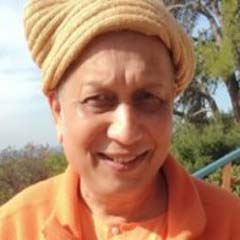
Swami Yogatmananda
Head, Vedanta Society of Providence
Vishishtadvaita Pre-Ramanujacharya
DAY 2: Saturday, September 13, 2025, 9:20 – 9:45 am CDT
Vishishta-Advaita Vedanta: Basics
Swami Yogatmananda, Minister
Head, Vedanta Society of Providence
ॐ असतो मा सद्गमय । तमसो मा ज्योतिर्गमय ।
मृत्योर्मा अमृतं गमय । ॐ शान्तिः शान्तिः शान्तिः ॥
Lead us from the unreal to the real
from the darkness of ignorance to the light of knowledge and from this limited existence to immortal unlimited existence. OM Peace, Peace, Peace!
Let me begin with a humorous story. There were four professionals discussing “who was first in the society?”. One of them was a doctor, one was a lawyer, another was an architect, and the fourth was a communist. The doctor proclaimed, “Well, human beings fall sick; there has to be in human society some rudimentary ways of treating diseases, so the doctors were the first.” The lawyer said, “Well, without some laws, some regulations, some mode of organizing, how can human society exist? So, the lawyers were the first. Doctors, you don’t have a case. You may deal with other types of cases, but legally speaking you don’t have a case here.” The Architect said, “Oh my dear friends! don’t you see that God himself had to be an architect in order to create this cosmos from the universal chaos.” Then the communist said, “But who created chaos in the first place?” So, the question is, “Who created chaos in the first place?”
It is very difficult to answer this question: “Who created the chaos?”
We always seek answers to our multifarious questions, which keep on shifting and changing, and look for guidance from the enlightened souls who have gone beyond these problems. They see in what way we can receive the message according to our state of mind, and they tell us different things, and those become the paths for us. Like, for those like me who are coming from the east coast, their advice would be: “Move towards the west, and you will land in Michigan”. Those who are coming from California, for example, would be told to move towards the east. So, different paths have been suggested according to one’s own state of mind. It is not that one path is correct and another is not correct. But once we get convinced about a certain path that is the path we should follow. In the beginning keep on doubting, keep on presenting your doubts, but once you are convinced then act on your convictions. An excellent idea, but the convictions get unsettled from time to time. For example, I feel very convinced of certain truths in the morning, so I say “Yes, the world is unreal”, etc., but when my stomach starts hurting I say, “Well, other things may be unreal but this stomach ache is real”. So our convictions keep on shifting and changing and that is why our understanding becomes confused. It may appear to be a good solution to just brush everything aside as a dream. Well, when you wake up from the dream, then you do not have to brush it aside even, it happens automatically. But, while I am dreaming, am I able to brush it aside as dream? This is not easy!
We have this difficulty of correctly understanding one and many. There is the philosophy of qualified non-dualism. Well, according to many great authorities, including Swami Tapasyanandaji, qualified monism or qualified non-dualism is not the correct translation of Vishishta Advaita. Although the terms are commonly used, they are not correct. I will come to that later, but before that let me tell you another story about our confusion about one and many. There is always a confusion about whether to call something as one or many. It is because things can appear as one or many depending on how you look at them. For example, if I am looking at a camera, that is one, but if I think of its parts then they are many.
A primary school child was studying grammar, and the teacher asked, “Tell me is ‘pants’ singular or plural?”. The brilliant child answered, “On the upper half it is singular, on the lower half it is plural”. Friends, we do laugh at it, but it is the same with everything. There is always a confusion about whether things are to be called one or many. Because of this the sages came up with the idea that all is one and the many things that you see is the glory of that one, but the glory is not to be brushed aside. That is how the path of Vishishta Advaita, as founded by Ramanujacharya, sees things. Although this view is not limited to Ramanujacharya, It is certain Ramanujacharya is the most important philosopher propagating this school where you see that many and one are together. Variety and unity are one, but the many are subservant to the one.
Variety is the changing aspect, which gives rise to time and space. This idea is very beautifully discussed in Ramanuja’s philosophy. We think that we are in time and space, but that is putting things in a reverse way. Actually our perception of multiplicity gives rise to this idea of space and time. It was a stunning revelation to me when I was studying Swami Vivekananda’s Jnana Yoga, “Oh my goodness!, we are not in time and space, we are the creators of time and space”. How do we get the idea of space? It is the distance between objects that is called space. Where there is no object, there is no space.
In the physical sciences, this was clarified by Einstein who said that there is no absolute thing like space. It is the perceiver that creates this idea of the space because of the perception of multiplicity. And what about time? This multiplicity that we perceive is not static, it is changing. It is shifting and changing all the time. This changing gives rise to the idea of time—what was, what is, and what will be. Not only does separation give rise to the idea of space, but it also keeps on shifting, changing, and that gives rise to the idea of time. So, these ideas of time and space are the ways that our brain functions and our mind functions. It is a program that is loaded into our systems. This hardware comes loaded with that program of multiplicity and, consequently, time and space.
So, even the idea that there is one becomes multiple, and, therefore, the multiplicity cannot really be brushed aside from our awareness. This is one approach for making you see that there is the one that connects all; it is seeing the connectivity. We always say, “Let us all find unity in diversity.” Now, the nondual approach to finding the unity in diversity is by considering the diversity as dream or ignorance. The Vishishta Advaita says, “No, no it is not like that. It is the one that is connected to all this many, and the many is also real. It is not unreal. It is true that it is dependent on the one, but it is real too.” This thought is also there, and it is not easy to brush aside. As Swami Vivekananda says, the commentators on the scriptures have interpreted their verses for consistency according to their particular schools because it was the norm that you should present your philosophy in a consistent way, showing that it is always correct. But, the approach that Sri Ramakrishna suggests is that, “No, this is correct and that is correct, too.”
That is also correct. It is dependent on the various different minds. These are paths for practice. The more we practice, the better we become at it. One of our friends, a volunteer, was fixing a window in Providence, and he was taking a long time—it took him about 3 days. I said, “Oh, you spent 3 days to fix this window”, and he said, “Swami, you will see that the next time I will do it in 3 hours, because now I know how to do it.” So as we practice we become perfect.
The Vishishta Advaita idea is that there is duality, but that duality is not really separate from the unity. It is connected to the unity; thus it governs the unity. This Vishishta Advaita, according to Ramanuja, cannot really be translated as qualified nonduality. Tapasyanandaji mentions in his book that it would then be what is called Karmadharaya Samasa in Sanskrit. But, it is not really a Karmadharaya. Karmadharaya means that you qualify something from whatever its actions and such things are. According to those you qualify it, and, thus, it seems that nonduality has been qualified. But Vishista Advaita is not a modification of nonduality. Advaita is not being qualified there. Vishishta means, he says, that it is the nonduality of the qualified whole. That is called bahuvrihi samaasa. Thus, the qualified whole and the nonduality of it is Vishishta Advaita.
Those who study the practices of this can see that the translation that it is “qualified nondualism” gives the idea that it is a variety of nondualism. Actually, it is a variety of dualism. For all practical purposes, it is dualism. Yesterday, I was trying to explain that all these different systems of Vedanta are really nondualistic systems. They are not dualistic like the Sankhyas are; they ultimately accept one reality. So here we see there are some very important spiritual ideas. We see that God and we are connected and when you connect, it becomes one. You have the chair that you are sitting on. As a chair, it is one, but look at all the parts: there are the legs, there is the seat, there is the back. From that viewpoint the chair is now many multiple things connected together into one big chair. Now, do you say that the back is unreal, the seat is unreal, the legs are unreal? No, they are not! Otherwise, the chair also will become unreal. So, this is the idea—multiplicity is not unreal; it is to be connected to that one presence—the divine presence. Thus, we have this system. Take our own example, if you look at the body then it is one. But, when you look at the number of cells then they become trillion. So am I a trillion or am I one? You get the same answer that the child gave, the pants is many if you look at down, if you look at up it is one. So what do you look at? It is one and many all interlocked as it were. Why is this multiplicity considered subservient to the one? This is a very important issue. Look, it comes then to “changing and unchanging”. Whatever changes you know to be multiplicity. When you have the sense of unchanging then you are seeing the unity—that which does not change. This idea is common! Whether it is non-dualism or qualified non-dualism, that which changes has multiplicity in it. When you are thinking of the unchanging, then you are looking at the aspect of governorship, the Lord that doesn’t change. We are all lords in that sense, when we are thinking of ourselves as unchanging.
We are unchanging! You might have decided long back that, “Yes, I am going to attend this retreat” I might have booked the retreat. How many months ago? Maybe one month or two months ago, I have decided that I will attend this retreat. Now, in that one month, so many things have changed in the body, a lot of things have gone in, a lot of things have gone out, the mind has also changed. You see, everything changes, and yet there is something that does not change, because of which I would say that I decided one month ago that I will attend the retreat and that same I has come here now. If somebody tells me, “No no, the one who decided is different and the one who came here is different”, then I am not going to accept it—”No no, it is the same I”.
So, there is this perception of the unchanging, and there is a connected perception of the changing. That changing is multiple and the unchanging is where you see no multiplicity there. This is born out in various verses in the Upanishads and Bhagavad Gita. For example, in Mundaka Upanishad you see how this universe comes up—beautiful examples. Now, it needed a bit of text twisting for Sankaracharya to make it sound completely non-dualistic.
यथोर्णनाभिः सृजतेगृह्णतेच यथा पृथिव्यामोषधयः सम्भवन्ति ।
यथा सतः पुरुषात् केशलोमानि तथाऽक्षरात् सम्भवतीह विश्वम् ॥
yathorṇanābhiḥ sṛjate gṛhṇate ca yathā pṛthivyāmoṣadhayaḥ sambhavanti,
yathā sataḥ puruṣāt keśalomāni tathā’kṣarāt sambhavatīha viśvam.
The universe is created just like a spider bringing out the web from itself. Now, the spider is real and is the unit, the one, and then it brings out the web. So, the universe also comes from God without any other material cause. Just as the spider brings out the web, so also the one divine manifests as this whole universe. It is not said to be unreal or a dream, it is there. The web is real. An insect will not get caught in an unreal web. The web is real! If the spider has to eat, then the web also has to be real. The web and the spider both are real, although the web is connected but dependent on the spider. Sparks come out from the fire. The fire is the source, it is the one that is the primary unit and main source, but from it comes the sparks, and a spark falling on some dry wood will make that also a big fire. Many fires in California have been caused by a spark from something. So, they are also real, you cannot brush them aside, saying, “No, no they are the products of ignorance!” Well, that is not easy to do! How can I say it is unreal when I am seeing it? As Sri Ramakrishna says, “Well, when you are not in that state, you may read it, and you may think that the thorn is not real, but when you are feeling the thorn you will say it is real at that time”. The Bhagavad Gita has so many verses like this. In the 12th chapter that we were listening to this morning in the chapel the Lord says
मय्येव मन आधत्स्व मयि बुद्धिं निवेशय |
निवसिष्यसि मय्येव अत ऊर्ध्वं न संशय: || 8||
mayy eva mana ādhatsva mayi buddhiṃ niveśaya
nivasiṣyasi mayy eva ata ūrdhvaṃ na saṃśayaḥ. 8
This philosophy of Vishishta Advaita gives a lot of scope for practicing Bhakti, such as “Let me get connected to God, may I devote all my mind to God and be connected to God, let me connect all my mind and intellect, let me invest niveshaya, let me put it in God and so forth”. It is getting connected to the divine.
Let’s consider the example of the light bulb and electricity. The electricity is primary because it does not depend on the light bulb, as such. Whether it is plugged in, whether it is switched on or not switched on, the electricity is there. But, to get the light you have to connect the electricity to the bulb, you need both. For electricity to be of any functional use you need both electricity, the source, and the appliances. Both have to be real. The process also has been described by a beautiful analogy in Shvetashvatara as well as Mundaka Upanishad.
द्वा सुपर्णा सयुजा सखाया समानं वृक्षं परिषस्वजाते।
dvā suparṇā sayujā sakhāyā samānaṃ vṛkṣaṃ pariṣasvajāte.
Sri Ramakrishna liked this analogy so much he drew this picture on the wall in Dakshineswar. It was there. I heard that the picture was there on the wall for a long time. Then it got plastered over, and we do not have it now. Changing and unchanging, they are kind of connected. The changing is suffering and wants to get united and wants to feel that unity with the upper self.
So, what is happening? “Aneeshaya sochathe muhyamanaha”. There are two birds “samane vurkshe”. The lower bird is on the lower branches and is eating the fruits on this tree and thus suffering, and there is one on the top of the tree that is not doing anything — just sitting. The lower bird suffers and looks up and sees how majestic, without any problem, this upper bird is and wants to go there. I am making this long story short. Actually, one can meditate for a long time on this illuminating uplifting idea. Thus, we come gradually to be connected more and more with that unchanging reality which is our own nature.
The Upanishad does not say it is your own nature, it says “sayudha sakhayaha”. The non-dual interpreters and then Sankaracharya had to do a lot of exegesis to say that, “no, no it was the higher bird alone that was there.” The Upanishad does not say this. The Upanishad concludes that it is “Anyam taya pashyati tasya mahimnam iti veeta shokaha.” When that mahim, the greatness of that upper bird, is perceived, this lower bird becomes free of all suffering. It is not said that it vanishes; it becomes free from suffering. This idea is also expressed in the Bhagavad Gita:
द्वाविमौ पुरुषौ लोके क्षरश्चाक्षर एव च ।
क्षरः सर्वाणि भूतानि कूटस्थोऽक्षर उच्यते ॥१५- १६॥
dvāvimau puruṣau loke kṣaraścākṣara eva ca ।
kṣaraḥ sarvāṇi bhūtāni kūṭastho’kṣara ucyate ॥ 15-16॥
There are these two kshara and akshara: the field and the knower of he field. As living beings we see these two realities in us. I gave the example Satyavratha changing and Satyavaratha not changing. We feel within us the changing “I” and the unchanging “I”. But, there is an overlord of all these — “Uttama Purashtvanyaha”. This is a very great way of putting Vishishta Advaita. Ramanujacharya also tells that it is “Tattvamasi”, a famous statement in Vedanta, which is interpreted by non-dualists as you are that. “Thou art That” means this Thou is an illusionary appearance, in ignorance this is thought of as Thou. In the famous example of the snake and the rope, there is a rope, but in ignorance you see it as a snake, and when the light comes the snake is gone. Not that this snake was there and then when the light was thrown on it, it quickly went into some hole, that didn’t happen. It (the snake) really never was there, only the rope was always there. This is the non-dualistic explanation of this.
But Ramanujacharya says that, when there is a direct explanation, why do you need to get into this exegesis and come up with some other meaning. It is you are that in your unchanging aspect, you are that in your changing aspect, and what you see you are. He says that the non-dual vedanta takes the symbolic/lakshana meaning. This means you just make a sign by this symbol to that which is real. Ramanuja says no, this is to be interpreted as what is called Samanaadhikaranya. It means putting things on the same platform like we do all the time. We are, say, the same as members of the Vedanta Society, but we are also different individuals. I am different from Swami Tyaganandaji. We are same from what point of view? Ramanuja’s contention is that we are all different, but as people attending this retreat we are same. So, we have been put on the same footing. Hence Thou and That are put on the same footing.
I will conclude by just pointing out that Vasishtha Advaita is not just Ramanujacharya, because Ramanujacharya calls this one unchanging Vishnu or Narayana and that kind of limits it. What about devotees who want to see it as Shiva? Ramanujacharya does not accept that, but that is equally valid. The qualified non-dualists or vishishta advaitins can be shaivite vishishta advaitins, shakta vishishta advaitins, and also vaishnava vishishta advaitins or any. So that is how Ramanuja’s philosophical part is very good, but when it comes to particularization that becomes the difficult part to accept, because one can be vishishta advaitin, yet instead of worshiping Vishnu, can be worshiping Shiva.
[This article is adapted from an article published in the Chicago Calling e-zine (Vol. 23, 2019).]
Swami Tyagananda
Head, Ramakrishna Vedanta Society, Boston
Dvaita Vedanta Pre-Chaitanya Mahaprabhu
DAY 1: Friday, September 12, 2025, 6:25 – 6:50 pm, CDT
Advaita Vedanta: Basics
Swami Tyagananda, Minister
Head, Ramakrishna Vedanta Society, Boston
OM asato maa sad-gamaya, tamaso maa jyotir-gamaya,
mrtyor-maa amrtam gamaya, OM shaantih shaantih shaantih.
May the divine lead us from the unreal to the real; from darkness to light; from death to immortality. Let the divine consciousness fill our hearts and protect us.
We will get to hear in the course of this summit, the four major schools of Vedanta, their perspectives, and also the possibility of harmonizing them. It’s helpful to see how these different perspectives even came about. A lot of philosophical approaches have developed as a result of human beings experiencing things within themselves and in the world outside, then trying to interpret their experiences; trying to understand what’s going on, and trying to find answers to the questions that arose in their heart.
One of the experiences that is common to our human situation is the experience of both joy and sorrow. There are times when we are happy, calm, peaceful, and there are times when we are stressed, anxious, and worried. Given a choice, we would all like to be always peaceful and calm. However, unfortunately, that doesn’t seem to happen. It’s possible that at some point human beings, at least some human beings, began to ask themselves, “When and how can I hold on to those few times my life, perhaps a few times during the day, when I’m really calm and peaceful, and what do I need to do in order to remove the stress and anxiety, worry and fear, and all of these negativities?” This kind of self-questioning and trying to understand our experiences led to a general feeling in the human mind that at some unspecified time in the past, it was possible that everything was really good. Everything was peaceful. Everything was wonderful. Somehow, things are not so good now. But, how exactly did this change occur—change from that ideal state to the present, not such an ideal state? Nobody knew.
When we experience something, but we have no idea how it started, then usually we resort to the language of myth. That’s how different myths have appeared at different points in history, in different traditions, to explain or describe how that fall from the ideal state occurred. In the language of myth, different stories have come. One of the well-known stories in the Western world comes from the Bible. The story is that, when God created Adam and Eve, He gave them a place to stay in Paradise, the Garden of Eden, where everything was perfect. No tension, no problem. Everything was just ideal. God told them not to eat the fruit of a certain tree. Mark Twain once said, “God didn’t know human psychology. If you want people do something, tell them not to do it.” Adam and Eve began that tradition. God told them not to eat the fruit of the tree, but they just went out and did exactly that. Then, of course, we read how that act of disobedience to God threw them out of the Garden of Eden, and that fall, the fall from the grace, occurred, and that’s where we are now. That’s one way of understanding how that perfect state was lost and the present imperfect experience came into being.
Myth is nothing but a story that human beings tell to understand what may have happened and how we can rectify the situation. There is a story in Vedanta as well. And the story is that in the beginning the reality was this one undivided, conscious presence. The word that is often used in the Upanishads for this reality is “Brahman”. Brahman is not the name of a person. It doesn’t mean some force or energy or anything like that. Brahman simply means the vast, the all-pervading. The problem that people who thought about this one undivided reality had to figure out was, “How did this one infinite reality suddenly become many?” We may talk about the One. We may write poetry about it. We might sing songs about it, but our present experience is anything but the One. We just see diversity at every level. This One, though it sounds like a very exotic idea, is not a part of our experience. So, the question is, how did this one undivided reality come to be many, which is our present experience. At the Parliament of Religions, Swami Vivekananda said, “The Hindu is bold. He says ‘I do not know how this mess occurred.'” When we say I do not know, that is an affirmation of our ignorance. When we don’t know something, that is ignorance. The Vedanta story begins with ignorance, because how this occurred is not known.
Ignorance has a great capacity. It can do amazing things. One experience that these early thinkers turned to was an experience in their own life. We all have lots of ignorance, but there is one specific instance of ignorance that occurs at least once in a twenty-four hour cycle and that is when we go to sleep. Because sleep, by definition, really means ignorance of the waking world. Think about it this way—every night when you switch off the light and lie on your bed, you may turn and toss for a while. At that point, you know exactly who you are, and you know exactly where you are. If someone asks you, “Where are you?” You say, “I’m in my bed.” If they ask you, “Who are you? What’s your name?” You can tell your name. Yet suddenly, at some point, no one knows the exact moment, you fall asleep. If you have a sleeping APP, you might know next morning when you fell asleep. You yourself don’t know that moment. You suddenly don’t know any longer who you are. You don’t know where you are. Sleep has this magical quality that suddenly in an instant, you find yourself in an entirely different world. We just call it the dream. The dream world. Really, nothing has changed. Just that as you lay in your bed, you knew who you were, and then you forgot who you were. In the dream, I not only see the dream world, but I see one person in my dream and I say, “That’s me.” The entire dream is projected from me. Maybe I’m the only person sleeping in that room. I forget myself and a whole new world is created. This whole world is a projection of my own mind. In that world, I just look at the one person in my dream world and say, “That’s me.” Therefore, I’m experiencing the dream in two ways
- I’m experiencing the entire dream from the “real me”, who is asleep.
- Then there is a “fake me” in the dream experiencing the dream world, when I get identified with this one person in my dream.
Now, here is a question. Brahman, of course, is a very impersonal entity, but the word that often gets used in religious language is ‘God’. If you want to refer to Brahman in the language of love, you should feel free to call Brahman ‘God’, recognizing that we are not using the word ‘God’ in the very popular sense when we are referring to Brahman. So, here is the question. When I fall asleep, I forget my identity and then create the dream world. What would happen if Brahman fell asleep? Now, that’s just absolutely a ridiculous question, because Brahman is consciousness and falling asleep means being mostly unconscious. So, asking the question, “What would happen if Brahman fell asleep?” is like asking what would happen if consciousness became unconscious? Ridiculous! It can never happen. But on the other hand, when I am asleep in my bed and suddenly find myself in Hawaii in my dream, it never happened because all the time I was in my bed. However, apparently, I can be in some different world in my dream. In exactly the same way, just as I cannot be in my bed and in Hawaii at the same time, Brahman cannot fall asleep. Really, it’s not difficult to speculate what might happen. It’s a very skeptical “If”. If Brahman fell asleep, what would happen? It is pretty much what would happen when I fall asleep. When I fall asleep, I forget myself and I project a dream. When Brahman would fall asleep, Brahman would forget that “I am Brahman”. In reality, Brahman, as we read about Brahman in the texts, is infinite. Just like in my dream, I’m no longer “me” because in my dream I can be dancing and running about here and there while the real “me” is asleep. Similarly, in Brahman’s dream, Brahman is no longer Brahman. Brahman is infinite, but in the dream, Brahman has become finite. Brahman is immortal. In the dream, Brahman has become mortal. This entire cosmos, these galaxies and stars and rivers and mountains and everything that we see is a dream that Brahman is having. In that dream, Brahman looks at one living being and says, “That’s me.” All of us experience that ‘me’ in our hearts. The “me” that we experience in our hearts is the ‘me’ that Brahman is experiencing in Brahman’s dream world.
That very situation is a separation from our true identity. When I start dreaming, I get separated from my real identity, and I acquire a dream identity. Similarly, when Brahman sleeps, Brahman forgets Brahman’s real identity and acquires, for instance, a human identity. Brahman, which is truly divine, is no longer divine in the dream but human. That is the kind of myth that is told in Vedanta. Why do I call it a myth? Because it didn’t really happen. All that has happened is that Brahman may have slept. Even of that we are not sure. All that we know is that right now we feel that we are mortal, we are imperfect, we have all these limitations, and we are trying to figure out how these limitations came upon us. The story that we read in the Upanishads is that this is one way how our mortality, our limitations can be understood, but in reality, we are infinite and free.
What do I need to do to get out of the dream? Just wake up! We don’t need to do anything else. But think about it this way. Now, in the dream, this “me” that I experience is the “me” that Brahman is experiencing. It’s Brahman’s experience of “me” that is now manifesting in our hearts. But when we look at the world around us, a question naturally comes – “Where did it come from?” Somebody has made it. You see a chair. The chair couldn’t have just come by itself. It was manufactured somewhere. Similarly, I look at this world and ask, “Where did it come from?” That’s how we then think about a being from whom this world emerges. One who projects or creates this world—Srishti. One who is responsible for maintaining this universe—Sthithi. One into whom this entire world gets absorbed—Pralaya. I conclude that there is one being from whom this entire world came. This thought could arise in any living being. However, as we are all human beings here, I’m just looking at it from a very human standpoint. Since each one of us is a person, we tend to think of answers to these questions in very personal terms. Therefore, what comes to mind is some Super Being who is still very personal. That’s how we see that Being—as the one who controls this universe from outside, who is the ruler of the universe. That is called Ishvara. The “Ish” Dhatu (root word) in Sanskrit means to rule. Ishvara or Parameshwara, the Supreme Ruler. It’s an effort that I make as one among the multitude of beings in this world trying to see who may have made this world, who preserves it and into whom it gets dissolved. This Ishvara that I conceive is a very personal being, just as I’m a very personal being myself.
Every entity that we see in our dreams is equally real. Because as long as the dream lasts, everyone in the dream lasts.
When the dream is over, everything is over. This personal being that I see, Ishvara, is as real as me. Yet, I know what a big difference there is between Parameshwara, the Supreme Being, who is supreme in every way, and me who is so little. Therefore, there is this experience of separation that I feel from the Supreme Being.
When I look within my own personality, I find that one of the ways of understanding my personality is to see that it’s at least threefold. There is a visible part of me, the body, which I can see and everyone can see. Then there is an invisible part of me, the mind, including intellect, the ego, thoughts, emotions, feelings, memories, everything—in other words, everything which is a part of me, which a surgeon will not find when my body is cut open. That’s the invisible part of me. There is third part of me within me, called the spirit. According to Vedanta, the body and the mind are both material. The third part, Spirit (Chaitanya), is non-material. Sometimes we make too big a deal about our mind. But from a philosophical standpoint, both body and mind are material, and they’re not very different from one another. The only difference is that I can see the one, and I cannot see the other. In every other respect they are identical. We know that the body gets tired. Mind can get tired. You put junk in the body, you fall ill. You put junk in the mind, the mind falls ill. They both have their doctors. As both are material, they act and interact upon one another. That’s why even modern medicine believes that most of the illnesses that we have are psychosomatic in nature. We know from our own experience that if the body is not well and if it remains unwell for a long time, very often it affects the state of mind. Likewise, if the mind is not doing well and it remains unwell for a long time, we know that it affects the body as well. Therefore, the reason body and mind are able to act and interact upon one another is because they belong to the same level. But there is something else within us, which doesn’t change. If you line up all the photographs of you right from a very young age up to this point, you will see that you don’t look alike in all those photographs. Clearly, there’s so much that has changed. When we were born, we weighed a just few pounds. Now we weigh much more. So, physically we have changed. Mentally, our thoughts, emotions, feelings keep on changing with age, with circumstances, with situations. In spite of so many changes in the body and mind, I somehow feel that I’m still the same person. If something has remained unchanged within me, it is the Spirit.
Now, think about how many separations have occurred. Brahman has fallen asleep. This whole world is projected from the Brahman’s mind. Within that world, Brahman zeroes in on some person and says, “That’s me.” So, there is a separation between Ishvara and this individual Jiva. Then, within the Jiva there is body and mind, and oftentimes the body and mind are not in harmony. So, there is a separation between the body and the mind. The spirit has always remained separate. Most of us are not even aware that there is something called Spirit within us. Most of us are just caught up in our own physical and mental worries and tensions. The mind itself, psychologists say, is also divided. There is a conscious part of the mind, and there is an unconscious part of the mind. Most of our mind is unconscious. We ourselves have no idea what’s going on within us. We are aware of only a little part of our mind. So, the mind itself has gotten divided.
As if all these separations were not enough, we look at the world outside and we find more separations. Separation between human beings. People might live in a family, but not everyone feels that oneness, so there is a separation between one person and another. For one reason or the other people fight, quarrel. There is separation between our talents, our knowledge, our skills and ourselves.
For instance, when you take up a job somewhere, you get separated from the products of your own work. Oftentimes when you take up a job, a part of your life, whether it’s eight hours or ten hours, no longer belongs to you. It belongs to your employer. The employer in return for the time of your life gives you some money. My skills, my talent, which I think are a part of me, are evaluated by my employer. My employer says, “Depending on this skill, this much is what I’m going to pay.” So, my skills also go on the market place of the world. What are all these job interviews and resumés? It’s another product that we sell. Just as shopkeepers sell us their goods, when you go for a job interview, you are the product. Therefore, we say this is what this product can do. In this marketplace of the world, we’re consumers of products and we’re also the products ourselves.
Think about what a terrible degeneration has occurred. This one infinite being just fell asleep. This World appeared, and this infinite being became finite, mortal, worried. Tried to figure out from where this world came. That’s how Ishvara appeared, and I began feeling my separation from Ishvara. Within me my body and mind got separated. Within my mind, my conscious and unconscious parts are separated. I’m separated from other people in the world. I’m separated from the part of my life when I have to work. We are no longer whole. We have become fragmented. As long as we remain fragmented, we cannot be happy. If somebody chops off parts of me and puts them everywhere, how can I be happy? Only when everything kind of comes together as a whole, could I happy. Therefore, all of these spiritual practices that we see are primarily meant to bring that wholeness. Apparently, my wholeness has gotten shattered into these hundreds of bits and pieces. The different ways of trying to remove those separations and getting back to being who I really am is what spiritual practice is all about. Depending on what kind of story we tell, depending on how we think the problem came to be in the first place, our solution will be determined. The biblical story I mentioned told how that ideal state was lost. The story stated that the fall from that ideal state occurred as a result of disobedience to God. Since the problem is disobedience, the solution is obedience. That’s how obeying the Lord’s commandments becomes the primary practice. Therefore, the solution depends on how the story is framed.
One of the ways in which the story is told is about self-forgetfulness, and that is what sleep is. So, if the story is that Brahman, somehow, apparently, we don’t know for sure, but apparently fell asleep, and the result of the sleep is this dream. If it’s a pleasant dream, we wouldn’t want to get up. But if it’s a nightmare, then the sooner we get up, the better it is. The only way to get out of a terrible dream is just to wake up. We might find some solutions in the dream. If a tiger is chasing me, of course I can run for my life. I can get a gun and try to kill it. There are solutions in my dream. Let’s say a tiger is chasing me. Well, what are the options before me? Well, first of all, save myself, and then I can try various ways to solve the problem. Another way exists, and that is just to wake up now. Waking up doesn’t really solve the problem. If a tiger is chasing me in my dream and I suddenly wake up, the problem is not really solved. I really don’t know what happened to the tiger, what happened to me. But the whole problem is dissolved. So, you’re not solving the problem. You’re really dissolving the entire dream.
The problem is this — in our dream, if we knew it was a dream, we could walk out of it anytime. Just wake up. Most of the time we don’t know that it’s a dream. That’s the problem. So, in my dream, if a friend were to come and tell me, “Hey, it’s only a dream.” I would roll my eyes and say, “What! What nonsense! It’s all real”, because that’s how our dream appears to be. We know that dream to be a dream only when we wake up and not when we are dreaming. That is the real problem. The Upanishads, the Gita and all of these great Vedanta teachers have been telling us again and again that this is a dream.
For instance, when you take up a job somewhere, you get separated from the products of your own work. Oftentimes when you take up a job, a part of your life, whether it’s eight hours or ten hours, no longer belongs to you. It belongs to your employer. The employer in return for the time of your life gives you some money. My skills, my talent, which I think are a part of me, are evaluated by my employer. My employer says, “Depending on this skill, this much is what I’m going to pay.” So, my skills also go on the market place of the world. What are all these job interviews and resumés? It’s another product that we sell. Just as shopkeepers sell us their goods, when you go for a job interview, you are the product. Therefore, we say this is what this product can do. In this marketplace of the world, we’re consumers of products and we’re also the products ourselves.
Think about what a terrible degeneration has occurred. This one infinite being just fell asleep. This World appeared, and this infinite being became finite, mortal, worried. Tried to figure out from where this world came. That’s how Ishvara appeared, and I began feeling my separation from Ishvara. Within me my body and mind got separated. Within my mind, my conscious and unconscious parts are separated. I’m separated from other people in the world. I’m separated from the part of my life when I have to work. We are no longer whole. We have become fragmented. As long as we remain fragmented, we cannot be happy. If somebody chops off parts of me and puts them everywhere, how can I be happy? Only when everything kind of comes together as a whole, could I happy. Therefore, all of these spiritual practices that we see are primarily meant to bring that wholeness. Apparently, my wholeness has gotten shattered into these hundreds of bits and pieces. The different ways of trying to remove those separations and getting back to being who I really am is what spiritual practice is all about. Depending on what kind of story we tell, depending on how we think the problem came to be in the first place, our solution will be determined. The biblical story I mentioned told how that ideal state was lost. The story stated that the fall from that ideal state occurred as a result of disobedience to God. Since the problem is disobedience, the solution is obedience. That’s how obeying the Lord’s commandments becomes the primary practice. Therefore, the solution depends on how the story is framed.
One of the ways in which the story is told is about self-forgetfulness, and that is what sleep is. So, if the story is that Brahman, somehow, apparently, we don’t know for sure, but apparently fell asleep, and the result of the sleep is this dream. If it’s a pleasant dream, we wouldn’t want to get up. But if it’s a nightmare, then the sooner we get up, the better it is. The only way to get out of a terrible dream is just to wake up. We might find some solutions in the dream. If a tiger is chasing me, of course I can run for my life. I can get a gun and try to kill it. There are solutions in my dream. Let’s say a tiger is chasing me. Well, what are the options before me? Well, first of all, save myself, and then I can try various ways to solve the problem. Another way exists, and that is just to wake up now. Waking up doesn’t really solve the problem. If a tiger is chasing me in my dream and I suddenly wake up, the problem is not really solved. I really don’t know what happened to the tiger, what happened to me. But the whole problem is dissolved. So, you’re not solving the problem. You’re really dissolving the entire dream.
The problem is this — in our dream, if we knew it was a dream, we could walk out of it anytime. Just wake up. Most of the time we don’t know that it’s a dream. That’s the problem. So, in my dream, if a friend were to come and tell me, “Hey, it’s only a dream.” I would roll my eyes and say, “What! What nonsense! It’s all real”, because that’s how our dream appears to be. We know that dream to be a dream only when we wake up and not when we are dreaming. That is the real problem. The Upanishads, the Gita and all of these great Vedanta teachers have been telling us again and again that this is a dream.
You are the infinite being pure and perfect. I would just say, “Yeah, yeah, yeah.” I mean, it feels good, but it really doesn’t change our life. Religion is not just about making us feel good. True religion is actually bringing about a transformation. The major challenge is that we don’t know that dream to be a dream in reality. Shankaracharya in his commentary, says the greatest miracle, the Maya, is this—the Upanishads keep on telling us tirelessly that you are the Atman, you are the infinite, you’re pure and perfect, and yet we don’t wake up. Sometimes it might make sense intellectually, but in real life it doesn’t really change us much. Nobody has ever told us that we are this body, and yet we believe it very strongly. That’s real Maya! Nobody has told us that we are human beings, and, yet, we are very convinced that we are. Even after reading hundreds of Vedanta books where you have been told that you are a divine being, that doesn’t really change our daily life much. That is Maya! So, what can we do? Clearly, and to put it very briefly, the first thing is to cultivate a very healthy skepticism—not take things at their face value. Don’t accept anything just because it appears to be so in some way. Always question. That is what Sri Ramakrishna asked all of his disciples to do. Always question! Swami Vivekananda says in one place that he questioned his master at every step. Those of us, who have read his life, know how skeptical he was. He tested everything. Sri Ramakrishna knew he was being tested and he liked it. He never got offended. He said, “Don’t you believe what I’m saying? You’re doubting it?” That’s what he wanted. It’s a healthy form of skepticism. Swamiji says that because he questioned his master at every step, he knew every inch of the way. So just nodding our head to whatever a Swami says, thinking that it must be true, is not I think the right approach. Accept only what makes sense to you.
If it resonates with your head and heart accept it. Otherwise, keep on questioning. If something does make sense to me, then I must, somehow, make it a part of my life. It won’t do to say, “Oh, yes, I accept that everything is one. I accept that I’m truly infinite”, and then go about the rest of my life living as if I’m a very finite, mortal, human being. That doesn’t make sense. So again, as I said, don’t accept anything blindly. But after you have thought about it, after you find it both intellectually and emotionally fulfilling, satisfying, then don’t let it remain only at the level of the intellect. Swamiji used to say that it should mingle in every drop of the blood and just become a part of who I am. In other words, it should influence the way I think, it should influence the way I speak, the way I relate with people and with the world. It should influence the way I do my work.
Obviously, we’re not going to be perfect at it. It’s natural for a perfect person to live like a perfect person. But, for an ignorant person to live like an enlightened person is difficult. But that’s the practice. Shankaracharya in his commentary says that the characteristics of the enlightened become the spiritual practice of the unenlightened. One of our Brahmacharins, many years ago, was in San Francisco with Swami Ashokanandaji, the head of the center and an enlightened soul. This Brahmacharin had been in the monastery, I believe, for some five or six years and was performing spiritual practices regularly, but found that after those few years, nothing much had changed. He was getting impatient wondering when he would be enlightened. He went to Swami Ashokananda and asked, “What more do I need to do in order to become enlightened?” Swami Ashokanandaji said, “What are you waiting for? Why don’t you start living now as if you’re already enlightened?” I think that’s the most practical advice any teacher could have given. If you have some idea about enlightenment or God realization, depending on what books you have read or what experience you have had, how do you think you will be when you realize God?
If you have some idea about what kind of experience you will have, then start living it now. Don’t wait. When I will realize God, I will do like that. It doesn’t work that way. What you’re going to do after God realization, start doing now. You’re not going to be able to do it perfectly, because you’ve not realized God. So, an unrealized person trying to live like a realized person will be very imperfect. When we do anything new, we are never perfect. If you start learning violin, for instance, or any musical instrument, your first day is never going to be perfect. But if you keep on practicing day after day, month after month, year after year, gradually, efficiency will increase and quality will increase. Once you become an expert, then you can play that violin or any other instrument very effortlessly. Similarly, as an unenlightened being, if I resolve that from this very moment, I’m going to live like an enlightened being, of course, it’s not going to be perfect. I’m going to fail miserably. But, if without being discouraged, I can say day after day that no matter how often I fail, I’m going to think the way an enlightened being thinks; I’m going to relate with other people in the world as an enlightened being would do; I am going to do everything like an enlightened person; If I keep on practicing it day after day, slowly, I’m going to get better at it. If I can live like an enlightened being, even for five minutes, that’s still good. If I can do that for five minutes, it gives me hope. If I can do it for five minutes now, maybe after a month or two or six months, I may be able to do it for six minutes, then seven minutes. Eventually if I can do it twenty-four hours a day, seven days a week, I’m already enlightened.
Sometimes we tend to think about enlightenment as some kind of a very a dramatic change. It may happen through God’s grace. I’m not saying that won’t happen. What I’m saying is, until that happens, we can try to help God, go nearer to that goal a little bit. So why not just begin with saying, let me be enlightened for thirty seconds and then increase it to one minute, two minutes. This way a gradual march towards enlightenment can occur. What it will ultimately end up with is that I suddenly wake up and find that all of this was simply a dream. That all along it was just a dream. Maybe, I may not, because there never was really a dream. So even that awareness that this was a dream may not last long.
I’ll just conclude by mentioning what Swami Shivananda Maharaj used to say, “What’s the big deal about realizing God? Essentially, you’re just going to be what you already are.” You’re not going to get anything new. Right now, I am what I am. Even now, even at this very moment, we’re already Brahman. There is nothing much to do. What we have to do is really a negative work. This kind of a cloud that has come separating me from who I am. I just have to remove the cloud and then discover that there was never really a cloud to begin with. That’s the approach Advaitins take. That may not be the right statement. A better statement would be, “If my mind thinks along these lines, then I can say this is the way my non-dualistic mind is thinking.” Therefore, don’t approach these things as some fixed philosophy—Dvaita, Advaita, Vishishta-advaita. It’s a burden to choose one of these three. You don’t have to choose anything. All that you have to do is look at your life, think about your situation, think about what you would like to be thinking. Read, listen, and see which approach makes the best sense to you. Depending on whichever way is best suited to your temperament, to your approach, to your personality, that will be your own specific way of waking up. These are some of the thoughts that come to mind, if you try to reflect about the human situation from a non-dualistic perspective.
[This article is adapted from an article published in the Chicago Calling e-zine (Vol. 22, 2019).]
Swami Kripamayananda
Head, Vedanta Society of Toronto
Vishishtadvaita during Ramanujacharya
DAY 2: Saturday, September 13, 2025, 9:45 – 10:10 am CDT
Dvaita Vedanta: Basics
Swami Kripamayananda, Minister
Head, Vedanta Society of Toronto
Vedanta is like Sri Ramakrishna’s story of sweet cake. However, you eat it, from the front or the back, it is sweet; it is tasty. Vedanta is like that. You study and practice Advaita, Visishta Advaita, Dvaita; all are so beautiful in their approach to reality, in their approach to the inner depths of philosophy, in their power to show us what we cannot ordinarily see. That is the power of Vedanta. We had wonderful expositions of Advaita and Visishtha Advaita. In Dvaita Reality becomes God.
In Dvaita Vedanta, God is real and also this world created by God is real. Cause is real and effect is also real. What is the relation between cause and effect? God is the efficient cause of this universe, but when He created, where did He get the material from? He is also the material cause of the universe. So what we see as this world is nothing but God, but we are not able to see God, to find God. The method to have that realization is through that third eye, the eye of Shiva, the eye of knowledge. But knowledge is so difficult. It cannot come just by reading the Upanishads and memorizing a few verses. So, is there any other way? Yes, there is, in Sri Ramakrishna’s words, ‘An easier way’.
That easier way is the way of love. Now, it is very easy to think of God as vast, most powerful, most virtuous. ‘Ojo asi, ojo mahi dehi.’ The prayer says ’grant me what you possess. I don’t have that confidence, that strength. You need to be my support, my strength so that I can also stand on my own feet supported by You.’ Unless God supports us, we are not able to stand. Let’s consider the wonderful example of Hanuman and Rama. When the Rama Setu was being built, people wrote the Ram Nam on the stones and put them in water and the stones floated and the bridge was being built. Rama thought, ’O, Rama’s name is so powerful, let me try.’ So, he wrote it himself and put the stone in the water but that stone sank. He heard a voice, ‘O Lord, that will happen.’ He looked back and saw Hanumanji. He was a devotee of Rama and always followed him like a shadow. All others had gone to take rest, but Hanuman was with Rama. Hanuman said, “Whatever is dropped from your hand will drown. It is because of your support that we are here. When you let go, we all will drown.” We are all supported by God, protected by God; That’s why we live, we work.
Who really works? It’s incorrect to say we work, because we don’t know the power that works through us. It is Rama’s power working through our eyes, ears and hands. In ignorance we say ‘I am the doer.’ Sri Ramakrishna once said, “Do you know the difference between ignorance and knowledge? When we say ‘I’ have achieved this, ‘I’ have done this, it is ignorance. When you say God has done this, or by the grace of God I have been made to do this, then that is called knowledge.”
Knowledge is the truth. Where is that God who is so kind to us, who is always with us, without whom we cannot breathe—That Ananda Rupi God, that blissful being, where is that God? If God is not there, who will breathe, who will see? Without God life is not possible. Forgetting God, life is not worth living, life is miserable. Remembering God, life is full of bliss. Someone said, “This world is all an illusion, a confusion”, but a devotee said, “What? This is a mart of joy.” When God is with us, then it is always blissful. You never get old; you are always young. If we forget God, then all the problems of old age, death, relationships come. Let us surrender to God. Let us eat mangoes, not count the branches and leaves. You become so blissful that you find God is every movement of life. Where does God reside? In heaven? Once in a primary class, the teacher asked, “Where does God live?” Many students said he lives above the clouds, in heaven. Others said that God lives in the hearts of human beings. A small boy said, ’God lives in our bathroom’. ‘What do you mean?’, asked the teacher. ‘Yes, because sometimes in the morning the bathroom door is locked from the inside, and my father walks around in front of it and says, ‘O God, you are still in there!’
For us followers of Vedanta, God is not in heaven. He might be, but we don’t want him so far. We want to make him a member of our family, to be very close to us. In Islam it is said that God is as close to you as the jugular vein in your neck. Vedanta says God lives in your heart. Sri Krishna said, “O Arjuna, God lives in the heart of every living being.” That is the Vedanta philosophy. How does he reside? He is the antaryami, the inner controller. It is God who says, ‘don’t do that, do this’. But we have to have the right ear to hear Him. Sometimes the voice is feeble. You see ice cream and a voice comes, ‘Don’t eat it, it is not good for you.’ But we think ’This is a special ice cream, let me have it.’ The antaryami always guides us in the right path. If we fall sick it is not the fault of God. God is our guardian angel. A person was walking on the road and suddenly he heard ‘Stop’ and the wall just in front of him fell down. Then he was crossing the road, but there was a green light and he again heard ‘Stop’. A truck passed right in front of him. He looked and asked ’Who is there?’ The reply came ’I’m your guardian angel, I take care of you at every step’. The man said ’O, then where were you when I got married?’
Where does God reside? He resides as our Atman, as our self. ‘Aham atma gudakesha, sarvabhuteshu sthitaha’. “I reside in every being as the atman.” What is the atman? Our very essence, the real ‘I’, which is God. When we say ‘I’, it is God. To understand this and find that God, which is within us, is Vedanta. We can start from duality. How do we find the God that is hidden inside the heart? They say that God created this world and then He thought, ‘I must hide, because if they find me, they will always be blissful and do no work. The purpose of creation will be lost.’ So where to hide? An Angel said ‘You have created this beautiful world, hide on the top of the mountains.’ God said, ’I have created men to be very intelligent; they will find their way to the top of the mountain and find me’. The angel said, ’Then hide at the bottom of the deep ocean.’ God said ‘Man will become so wise, so technologically advanced that they will go deep down, so how will the Lila go on?’ So God decided to reside in that place where no one will search. If they search, they will find, but no one will search there. Deep within our heart is that place. ’Paranjihani vyatrinat svyambhu’. All the senses say ’look there, hear this, etc.’ But what is inside? We don’t look, we ignore it, and so we don’t find God residing in our heart as our own self. That is what is called God’s play going on. Vedanta says this world is the play of God, his Lila. There is Nitya, the eternal unchanging reality, and Lila ‘eko aham bahusyamaha’, ‘being one is not fun’. I want to be many.’
And God became many. He became the planets and stars and everything else. What is the purpose? It is just for fun. God wants to have fun. If you are alone there is no fun; there might be peace, there might be bliss, but God also wants to enjoy, we also want to enjoy. It is happiness, bliss, and what is the most condensed happiness? That is called God. We want to enjoy the bliss of God. That is the Vedanta sadhana.
Ramakrishna Paramahamsa was an advanced soul. He had attained nirvikalpa samadhi, the culmination of Advaita Vedanta. He saw a sadhu, like a mad man, eating anything he found. He realized by seeing him that the sadhu was established in Advaita Vedanta, seeing Brahman everywhere. Sri Ramakrishna said, ‘Mother, don’t make me like that. I want to live and enjoy talking about you, remembering you and worshipping you, singing your name and talking about you.’ He said that all those jnanis have a monotone: ‘The world is unreal, like a dream, and God is real. Nothing more to say!” Sri Ramakrishna said, “It’s like the monotone of a shehnai. But, I want to play the flute with all seven notes and enjoy the music coming out of it.”
In Advaita you become that Brahman, that blissful state. But we like to enjoy blissful things. So, a Dvaitist says, ‘I don’t want to become sugar, I want to eat and enjoy sugar, I want to enjoy love of God’. It is said that Sri Krishna saw the love of Radha. Her love was exorbitant, ecstatic love and he was deprived of that. He said, “I want to enjoy the love of Radha, the love of a bhakta”, and so with this wish he was born as Gauranga, Chaitanya Mahaprabhu. God being born to enjoy the love of God! He was God incarnate, and yet the greatest devotee of Sri Krishna. What is the way to have God in our being—To live with him? The way is love, says Sri Ramakrishna. What type of love? Pure love. ‘Avyavacharini bhakti’—Unadulterated love. With the whole mind, soul and heart! Jesus said to love God with all your mind and heart and soul. Many love God and pray to God, but what do they pray for? They pray for good health, their son’s good education, their daughter having a nice job, etc. They make God as the means but not as the object of prayer. That is vyavicharini bhakti. You have love for God, faith in God, but you don’t want God. You want material things from God. Then you will not get God but whatever you have prayed for. Sri Ramakrishna told Swami Vivekananda, “Go to the Divine Mother and pray to her. Whatever you ask will be granted.” How could he promise what the Mother would give? He was one with the Mother. The Mother resided in his heart; the Mother was speaking through him. Swami Vivekananda went to pray for some food, some clothing, some money, and a means of livelihood for his impoverished family. He came back to Sri Ramakrishna who asked, “Could you ask for what you needed?” Swamiji said, “No, I could not ask.” “Why?” asked Sri Ramakrishna. “Because it would be like going to a king and asking for pumpkins and potatoes.” When you go to the king you ask for the right things. When you go to God, ask for devotion, for peace and purity, why ask for smaller things, which are insignificant? Tuchatva! Ask for the right things from God. “I asked from God jnana, bhakti, viveka, vairagya”, said Swami Vivekananda. Give me right knowledge, devotion to you. Let me have faith in you, full surrender to you and discrimination, with the help of which we can discern what is right and what is wrong.
There are different relationships that can be maintained with God. God has to be made a member of our family. How do we develop this presence of God in our house? One way is prayer. When you go out, pray to God, ’God, I’m going, please take care of me.’ When you come back, again pray to God saying, ‘God, I have come, everything was good’. You start talking whenever you feel the presence of God. That will slowly develop the presence of God in that room, in that corner, and the presence of God from that corner will come into your heart and then you will feel that God is always present with you.
You will not need to go to the prayer room. You can pray anytime. I don’t have to go anywhere to see my beloved. I just have to lower my neck and I see my beloved sitting in my heart. That is the real presence of God one can feel. Sri Ramakrishna called on God as mother, as father.
That is not in the traditional Bhakti Shastras. The Bhakti Shastras state that there are five types relationships with God. First is shanta, where you are in the presence of God and you are peaceful, you don’t seek anything. A Peaceful relationship, not emotional! Then there is dasya. You are the servant of God, always ready to serve God. God is my master and I want to feed him, make him sleep, that feeling comes. God is offered flowers, offered fruits, asked to take rest at a particular time. The door of the shrine should not be opened at that time. God is a living presence there. Then comes Sakhya. God becomes your friend. “Come, let us go to office, let us go to the friend we have to visit. You have to speak through me.” The relationship changes, the attitude changes and God comes closer. Then there is the relationship of Vatsalya. Suddenly you become the parent and God becomes the child, a baby. Now, we don’t ask anything from God. All the glory and greatness, ‘ojo asi, ojo mahi dehi’… all that is gone. We don’t ask anything. Now, God is someone you have to take care. At first, we asked God to give us bhakti and powers. Now, the power of Bhakti has grown so much that we start looking after God. These are not just theories; people have experienced these things. Sudama, through his mental eye saw Sri Krishna coming and listening to his songs. Gopaler Ma, who was doing japa to the small idol of baby gopal, saw the baby come and sit on her lap and snatch the mala away from her. Why was he snatching the mala away? She was taking the name of God, he should rather help and not disturb. When God is seen, then what is the need for japa? The purpose of japa is to have that realization. Gopaler Ma came to Sri Ramakrishna with Krishna on her bosom, running and shedding tears. Wonderful experience! She feels that God’s feet are touching her chest. Crying she comes to Dakshineshwar to Sri Ramakrishna, and she asks Narendranath, who was a skeptic. Narendra used to say all these were the figments of the mind. When the mind is weak it starts seeing different visions. This old lady asked, ‘What I see, was it true?’ He said, ‘Yes mother, what you saw was true, was right. It was real’. That happens when real experience comes. God becomes real.
Latu Maharaj was meditating in the evening. Sri Ramakrishna came and said, “You are meditating? The one on whom you are meditating is making dough.” Holy Mother was preparing to make rotis. “Go and help her, that is a better sadhana than your meditating on Brahman.” Service to God!
Sri Ramakrishna was trying to have the vision of God. Tired of worshipping the statue, he wanted to know if he was just worshipping the stone idol or was God really there. He went to the extreme and finally fell down. He then saw an ocean of light coming to him and he was drowned in that. He became superconscious. Wasn’t that the Mother? The creator of the universe! With or without form, we don’t know, but he didn’t see Mother Kali coming with four arms. He saw an ocean of light, the light of knowledge. That was the first vision of the Divine Mother Kali. It started from Dvaita sadhana—worshipping, feeding. When he returned to consciousness of this world, he was saying ‘Mother, Mother’.
Then he had Advaita sadhana and attained nirvikalpa samadhi. When he came down, though he should not have because he was living in reality, he was ordered by the Mother, ’Remain at the threshold.’ That means sometimes he would be in the Lila and sometimes in the nitya. “Whenever you want to see me, you will be with me, forgetful of the world, forgetful of your body and you will be in eternity.
Sometimes you will come back to this world, play with the devotees, talk to them, dance with them, sing for them, and enjoy the Lila.” He saw a small girl with disheveled hair walking in the courtyard and climbing the stairs of the temple, sometimes looking toward Calcutta. It was the Divine Mother. He could hear the sound of her anklets. He said, “Mother you may fall, please be careful.” Mother was running in the courtyard. The Divine Mother who creates and protects this universe, to her Sri Ramakrishna says, “See that you do not slip and fall.” That was the Dvaita sadhana. When the God who is beyond our senses becomes experienceable, enjoyable, that is Dvaita sadhana. Sri Ramakrishna says that the love needed for God realization has to be intense and yearning. You don’t need to study any scripture, do chatushtaya sadhana, nothing like that. Just have love for God and you will realize God.
There was a person who used to say he was an Advaita follower. “I am like space, like kha. It doesn’t matter what happens to me, everything is unreal and the atman is infinite space, not touched by anything.” One day Sri Ramakrishna went to this Krishna Kishore. He found that he was disturbed and asked, “What happened? You seem to be disturbed and distressed.” “Oh, don’t ask, today the tax people came and since I could not pay, they said they would take away all my pots and pans. That’s why I’m worried.” Sri Ramakrishna laughed and said, “Why are you worrying, you are not that individual being, you are Kha. What happened to that kha? You were always proclaiming that.” He is trying to say that whatever we say has to be felt. If we say ‘Aham, Brahmasmi’ and we feel that we are this body, how will that tally? Sri Ramakrishna gives an example of the parrot. If you make it say ‘Ram, Ram’ it will say it. But when the cat comes and catches the parrot, the Ram Nam is forgotten; then it says ‘tya, tya’. Its original voice comes out. ‘Ram, Ram’ was only learnt. Our knowledge has to be genuine too. When we are identified with this body, we feel we have a soul, let’s try to reach God from there itself. Let us get connected through our daily lives and works. How to worship? Some follow shodashopachara, others something else. But when love becomes intense, there is no need for any upachara. You don’t have to speak any Sanskrit, you don’t have to even utter any words. Just through your mind, offer the flower. Swami Vivekananda used to worship that way. Sri Ramakrishna, before offering the food would say, “O, mother, you want me to eat first?” He then took and ate himself. This is called urjita bhakti.
What did Swami Ramakrishnananda see in the picture of Sri Ramakrishna? It was just a picture, but for him it was a living personality. Not the color or paper. He saw Sri Ramakrishna’s presence there. Holy mother said ‘Chaya kaya samaan’. Photo, shadow and real body are the same. It represents the deity and reminds us. Once it was very hot and Ramakrishnananda got up and thought ‘Oh Thakur must need some air’, so he took a hand fan and started fanning for the whole night. That type of living presence of God has to be felt. It comes through practice. In the photo, that is the beginning. In the heart, that is the middle. In the heart of everyone, that is the culmination—when we can find God present in all. Swami Vivekananda said, “My aim is to preach Vedanta to everyone, every moment that Vedanta is manifested, every soul is treated as God”.
Once there was a crack in the roof at the old Baranagore Math and water started seeping in. Ramakrishnanandaji brought an umbrella and in the night, went to the shrine and kept the umbrella there. Why didn’t he just take away the photo? He thought, “It is nighttime, and if I move Sri Ramakrishna he may wake up. His sleep will be disturbed. “The whole night he was in the shrine, protecting him from the raindrops that were falling there. Holy Mother’s way of worship was similar. When food was offered, she would say, “Come, it is time for food, come. Sit down and eat. “When food was offered, she would say, Come, it is time for food, come. Sit down and eat.” She would close her eyes and see Sri Ramakrishna eating in her mind. Once she was going and the earthen cooking pot broke. She said, ”Now there is no time to cook, come and eat this”, and she felt that Ramakrishna was eating. We think that she is thinking that Ramakrishna is eating, but for her Ramakrishna is really present and eating. That experience has to come to us as well, and it will come when we have that intensity of love.
How will all this happen? Repeat God’s name. When God’s name is repeated with love, God comes. Sri Ramakrishna said this: “Repeat his name, sing His glories, have some holy association and do vichara.” Vichara is the discrimination that God is the reality, the world is only for two days. Remember that, and God will slowly come to your life, and it will become blessed. Ramprasad said, “You have six days for yourself. Give one day for God.” But, Vedanta says that you have to give every day for God. Not even every day, every moment for God. How will we work then? Whatever work you do, that is the worship of God. How to take care of my children? Who are the children? They are God in the form of the children. Your husband, your wife, your relative and your colleagues, all God in different forms! ‘Eko aham, bahusyamaha.’ The one has become many, treat them as God and live in the bliss of the presence of God, in the company of God. Ramprasad says, “When you eat, think that you are offering food to the Divine Mother, seated in your heart. You are not the one eating! When you go for a bath, think that you are doing prostration to God. When you fall asleep, think that you are meditating on the divine. When you walk, think that you are circumambulating the temple of the Divine Mother.” Every moment work for God! That’s how God becomes real in our life, and we are always with God. When we can be in that state of association with the divine, that is the purpose of life. There has to be a transformation in our life through all the devotion and knowledge. The transformation is from a rude person, from an egoistic person, to a very kind person. Our ego ripens and becomes sweet, kind and soft. Then you can accept things and respond in a nice way. You can speak very kind language. That transformation comes when God comes into every moment of our life. Let us be aware of God and pray that God should be present in our life at least when we die. We do not want God only to be there when we die, we want to experience Him when we are alive—jivanmukta. God should be manifested in every moment. With intense and sincere prayer, God will come into our life. We will see God in our heart and in the hearts of everyone, in every being. Then we will say ‘You are the reality.’ Let us pray and find God present in every bit of this creation.
[This article is adapted from an article published in the Chicago Calling e-zine (Vol. 21, 2019).]
Swami Satyamayananda
Head, Vedanta Society of Western Washington
Dvaita Vedanta Post-Chaitanya Mahaprabhu
DAY 1: Friday, September 12, 2025, 7:15 pm – 7:40 pm CDT
Hard and Soft Problems of Consciousness
Swami Satyamayananda
Head, Vedanta Society of Western Washington
Many studies and talks of consciousness refer to the hard and soft problems they encounter. These terms were popularized by philosopher and cognitive scientist David Chalmers. The soft or easy problem is regarding the functional aspects of consciousness, which can be theoretically, not practically, explained through neurology, psychology, cognitive sciences, biology, and so on. The hard problem is intractable: Why does consciousness exist at all; why and how does the brain and other functions give rise to conscious experience, and what is the nature of subjective experience? These are not just fundamental questions for a few philosophers and scientists but for the human race!
The Puzzle of Subjective Awareness
The puzzling nature of subjective experience, which has baffled philosophers for millennia, is an introspectively understood and accessible mental state. It is labeled by modern researchers as “qualia” (“quale” sing.). Every sensory and motor experience has a distinctive mental state or flavor of subjectivity. It is “experienced” and undeniable. But does this experience belong exclusively to the mind? Is it a mixture of body and mind? Is the experience related to the external world? These questions sound ridiculous and unnecessary to many. It is self-evident that subjective experience relates to the mind, senses, body, and the external world. However, it is known that “reality” of the external world itself is an active reconstructive process in our minds. What we cognize is a “representation” of what is outside. In that case qualia is thus a representation of something that is not genuine! These are not the old ideas of ‘subjective idealism’ that many past philosophers tried to defend. Then the brain is taken for granted, but how does the firing of neurons, with their chemistry, bring about patterns that are intensely subjective and real? Understanding qualia is to understand consciousness. Qualia, however, is both transient and yet not transient. Transient because the subjective experience does not last for long; not transient because one has a memory of it. This memory is revived with every other similar experience. And chitta, or memory, has a vast storehouse! Think of qualia as forming the tip of an iceberg, the vast masses of subjective-objective experiences are in subconsciousness. This is generally not accounted for in most cognitive studies on consciousness. If it is below consciousness, then it cannot be really qualia, according to its definition as being purely conscious and subjective! Over and above, these theories cannot stand before the doctrine of reincarnation. For the assumption of such studies are regarding single birth and lifetime.
Disagreements and Agreements in Hardness and Softness Studies
Another modern theory suggests that consciousness might be a hallucination. What is perceived internally is hallucination, only in our case we agree on certain things, and it is corroborated externally, while in others with disabilities, hallucination does not sync with external realities. A few others also propose that consciousness is an illusion. Vedanta steps in to say by the same argument that materialism is a hallucination or an illusion, which, again, some thinkers are beginning to toy with this idea. All this just goes to show that the soft or easy problem of consciousness is not soft or easy at all. The brain is subject to hallucination and illusion, not consciousness. Vedanta goes so far as to say that death itself is an illusion!
Then also consciousness is said to be the last frontier by some. Last frontier of what? This is the very first frontier in Vedanta philosophy. The consciousness we embody is the universal consciousness and it is foundational, not a derivative of materialism. The Lord declares in the Bhagavad Gita (13.16), “And that Knowable, though undivided, appears to be existing as divided in all beings. It is the sustainer of all beings as also the devourer and originator.”
Faith V/s Fact
Religions are called “faiths” because one believes in something in the absence of evidence. And we have seen the effects of such “faiths” that have brought and is bringing havoc and strife to the human race. People of different “faiths” have killed and died for their “faiths”. That is why sensible people are veering away from institutionalized religions. Swamiji says, “religion is realization not frothy talk.” Real science is also not frothy talk it is evidence based. Vedanta is not a faith religion in the traditional sense. It is experience, it is evidence. The evidence is here in one’s consciousness. This indubitable fact of existence is planted firmly in consciousness. Vedanta then can be called the science of consciousness. It can also be called the science of all religions! But, given the above discussions it is clear that this consciousness needs something more than just intellectual understanding or faith or even belief. Swamiji says that “intellectual assent or dissent is not religion.” He puts it powerfully, “The Vedanta preaches the ideal; and the ideal, as we know, is always far ahead of the real, of the practical, as we may call it. There are two tendencies in human nature: one to harmonize the ideal with the life, and the other is to elevate the life to the ideal. It is a great thing to understand this, for the former tendency is the temptation of our lives. The first step towards which is to give up selfishness, to give up self-enjoyment, … when a man brings an ideal which can be reconciled with my selfishness, I am glad at once and jump at it. … Therefore, I will ask you to understand that Vedanta, though it is intensely practical, is always so in the sense of the ideal. It does not preach an impossible ideal, however high it be, and it is high enough for an ideal. In one word, this ideal is that you are divine, ‘Thou art That’.”
Thus, this evidence of consciousness, or existence in us, has to be unfurled in all its real nature by raising ourselves to the ideal. That is Vedanta. For starters, as has been declared in the Bhagavad Gita, consciousness is one, appearing as many. Vedanta does not want many types, classes, kinds, or degrees, of consciousness. Oneness and unity makes perfect sense for something that is fundamental. Individual consciousness must be embedded in universal consciousness.
The Lord Makes Vedanta Easy
Just as the hard and soft problem (not really) of consciousness studies, Vedanta is both difficult and easy. Difficult on your own; easy if one takes the help of something or someone. Now this “something or someone” cannot be other than oneself, or it will delude and mislead us. That has been the problem among researchers in psychology, or neurology, which take the brain as an aid to understand consciousness. In “faith” religions they project that “something or someone” outside of ourselves, in the skies or heaven. Which opened such ideas to derision among atheists and agnostics. Vedanta was aware of this fact and did not fall into this trap. The Lord, says in the Bhagavad Gita (13.17), “That is the Light even of the lights it is spoken of as beyond darkness. It is knowledge, the knowable, and the Known. It exists specially in the hearts of all beings.” “That” is the knowable, the reality or existence, or consciousness. And further in (15.15), “And I seated in the hearts of all. From me are memory, knowledge, and their loss. I alone am the object to be known through all the Vedas; I am also the originator of the Vedanta, and myself am the knower of the Vedas.” This Reality is not unknowable but known. Swamiji says, “Vedanta preaches a known God.”
The Lord is the Self (Atman) of our self, the Consciousness of our consciousness. It is the eternal subject. We cannot take any other aid other than this subjective consciousness. The Lord also knowing our weaknesses, turns the hard problem also easy by declaring, “Since this My Divine Maya made of the (three) Gunas is difficult to cross, (but) those who take refuge in Me alone, cross over this Maya” (7.14). But then the difficulty arises for the majority—how to meditate and reach that central core of consciousness within us?
Ramakrishna and Holy Mother Embody Vedanta; then we Embody Them
This hard and soft problem is not easy, but what is ever easy in life? We have weakened ourselves by thinking as materialists and believe in outlandish theories and doctrines. This “unknown” (for now) subjective consciousness embodies at times. Vedanta is easily understood in the light of an Avatar’s life. Furthermore, understanding an Avatar is understanding ourselves, and the world in the truest sense. We are glad for we have Sri Ramakrishna, the avatara-varishta, the best of the Avatars, as Swamiji declared. Not just that, we have the Divine Mother herself who has descended in the form of Holy Mother Sri Sarada Devi! While embodying the principles of Vedanta in its transcendental and immanent aspects, Sri Ramakrishna and the Holy Mother have inspired this grand philosophy of Vedanta by helping us to live a lofty life of the spirit. As they embody the highest truths of Vedanta, we must embody them. Then our personalities become divine, and Reality becomes easy to actualize. Thus, the hard and soft problems will vanish like a dream, and we will be liberated. n
Brahmacharini Jyoti Chaitanya
Chinmaya Mission, Atlanta, Georgia
Advaita Vedanta Propagated by Women Sages
DAY 2: Saturday, September 12, 2025, 03:40 – 4:05 pm CDT
A Journey towards ‘Spiritual Unity and Blissful Divinity’ and its Relevance in Today’s World
Brahmacharini Jyoti Chaitanya
Chinmaya Mission, Atlanta, Georgia
Our ancient Ŗṣis of the Vaidika period were spiritual scientists of unparallelled caliber, whom, in their deepest meditations & heights of contemplation, sought to unravel the psychological intricacies of the human mind. Thus did their revelations uncover a cornucopia of techniques & Truths (i.e sādhanas which would fructify their sādhya). By effective & systematic implementation of the knowledge of these pristine techniques, the human mind would discover a road map to take it from its current state of desire driven ambivalence and sense of incompleteness, to a Supreme & everlasting fulfillment. In short, from the plague of finite existence to the paradise of Infinitude. Thus stood the premise & promise of Advaita Vedānta : A blissful internal integration & unity, even amongst the apparent diversity of life. For the wise ones knew, that diversity was not opposed to unity. Though they appear to be polar opposites, the path merely needed to be brought to light, by which to unify the external diversity through internal unity and effect a harmonious balance in all of life’s endeavors; spiritual, secular, social and more. To achieve this though, a medium would need be revealed, which could address the variety of human psyches & take them from which ever rung they stood at, on the ladder of spirituality, affording them a pantheon of paths to evolve and ascend. Paths which were tailored to each of their particular temperaments. Thus did the Masters of the Vedas propagate, “Infinite paths to the Infinite Reality”. For they recognized that only through such diversity of approaches could every man of every mental predisposition be led to eventually converge at the same Ultimate Unifying Divine Entity.
From the ancient & paramount concept of eka jīva vāda to the modern predisposition of the human mind toward bahu jīva vāda, along with the paths that appease each of these visions, one truth stands glaring : that from the most complex to the simplest of minds, “As is the vision, so is the view”.
The vision of man has always & continues to be, even more-so in modern times, ‘upādhi pradhāna’, i.e predominantly influenced by the conditioning factors which surround us and engulf our vision of ourselves and others. For example, we are more likely to define ourselves by the upādhis of daughter, spiritual seeker, father and professional, or envision others via the upādhis of dynamic, lazy, charismatic etc., than to look past these upādhis to realizing the unifying spirit within all. And so, if religion is to truly make an impact on men, it must meet them where they are. If we see ourselves as upahita, then, we cannot be expected to connection effortlessly with a God who is anupahita (without upādhis). Each sādhaka (seeker) is at their own point of evolution up that ladder of spirituality, some identifying more with the upādhis, others less, and certain finding comfort in eliminating them altogether. But this is the beauty of Sanātana Dharma’s diversity. That it can provide a path tailored to each. Our Pūjya Gurudev Swāmi Chinmayānandajī would parallel Hinduism to a buffet. Such a kaleidoscopic variety of options that it could feed every soul. For the true fulfillment in a meal lies in the satiation of that which specifically we are hungering for.
Our ṛṣis realized that to ignore adhikari bheda (variety in the predispositions of seekers) is to alienate an entire faction of God’s people. Thus did the divine paths rise up. Three predominant ones of them stating that :
– First, if I connect with myself as a mere humble speck in the Divinity that is my God’s universe, then the Dvaitic path rises up to meet me saying, “हरि ब्यापक सर्बत्र समाना। प्रेम तें प्रगट होहिं मैं जाना ॥” (Śrī Rāmacaritamānasa). Through that loving vision of your lord, see the world, work in the world and live life as a complete divine surrender to that Hari who is above and beyond us all.
– Secondly, if instead, the ideal that brings joy to my heart is seeing myself as an amśa of the Supreme Divinity. “Oh Lord, I am a part and you are the whole.” Then through that beautiful Upādhi, the Viśiṣṭa Adviatins embrace themselves into that Celestial whole, like a spark into the conflagration of Consciousness saying : “तदेतत्सत्यं यथा सुदीप्तात्पावकाद्विस्फुलिङ्गाः सहस्रशः प्रभवन्ते सरूपाः । तथाक्षराद्विविधाः सोम्य भावाः प्रजायन्ते तत्र चैवापि यन्ति ॥” (मुण्ड .२.१.१) Just as an ember is emitted from the resplendent flame, so too are you that spark of the Divine. Emerged from Him, you shall one day merge back into Him, in one brilliant blaze of glory.
– And finally, if my predilection has evolved to the point of casting off the layers of my personality and attachments. I seek to discard, layer by layer, the upādhis which have defined me my whole life and dissolve them all into their substratum of Consciousness. When the salt doll yearns to return to the ocean, then Advaita reaches out, consoling: “वाचारम्भणं विकारो नामधेयं मृत्तिकेत्येव सत्यम् ||” (छा. ६.१.४)You are right, let not the names and forms of the upādhis define you anymore. Seek to intuit the source behind the superimpostion, between, within and beyond it, “प्रतिबोधविदितं मतं हि अमृतत्वं विन्दते ।” (केन २.४)
In essence, each unique path must be respected, for as cultured beings, just as we embrace racial diversity, by the same measure should we show respect and brotherhood in regard to spiritual diversity. For who are we, if even the wisest amongst us proclaimed that the Ultimate Truth though one, is indeed expressed diversely, एकं सत् विप्राः बहुधा वदन्ति I Through such an elevated vision alone can we have spiritual unity amongst the dynamic diversity of the world. This alone shall fructify a blissful divinity internally.
In today’s world especially, such internal transformation is the manditory foundation upon which for solid external transformations to be triggered. And so, only with this inner metamorphosis can humanity become more accepting to embrace the other forms of diversity which surround us. As this vision trickles into all other facets, can we eventually evolve to a universal unity amongst the blissful diversity of all aspects of our life and eventually across borders to all of humanity.
It only takes one, to initiate a domino effect. May we be the ones who are courageous enough to, “be the change, we wish to see in the world!”
श्री गुरुभ्यो नमः
ॐ तत् सत्
Brahmachāriṇī Jyoti Chaitanya
Chinmaya Mission Atlanta, U.S.A
Brahmacharini Jyoti Chaitanya
Chinmaya Mission, Atlanta, Georgia
Advaita Vedanta Propagated by Women Sages
DAY 2: Saturday, September 12, 2025, 03:40 – 4:05 pm CDT
कार्य कारण संबन्धः
Cause – Effect Relationship in Creation Theory
Article on One Scholarly Aspect of Advaita Vedānta Philosophy
Since time immemorial, the origin of the universe and man, has been an enigma to the mortal mind. Science, in its best attempts, has as yet fallen short of solving this age-old mystery. One postulation, is that the reason for this deficiency is primarily because, the resolution does not lie solely in the purview of astrophysics, but rather within the realm of metaphysics. Thus does Advaita Vedānta philosophy enter with its declaration :
कार्ये हि कारणं पश्येत् पश्चात् कार्यं विसजयेत् ।
कारणत्वं ततो नश्येदवशिष्टं भवेन्मुनिः ॥ (A.A 139)
In the effect, come to recognize the cause which intuits in and through it.
Then, dismiss that vision of the effect altogether, since effect is merely cause in a different form.
Now cause loses its status as a ‘cause’, in the face of no effect.
In the absence of all cause then, what remains? That Causeless (beginningless and endless Entity)
the Realized One becomes.
What Bhagavān Ādi Śaṅkarāchāryajī points out to us here, is that the notion of an ‘effect’ is the first erroneous thought. Pot is an effect, clay is the cause. But show me the pot separate from clay? Impossible! The idea of effects is a misnomer actually. They are kalpanā-mātram only (a superimposition) Gaudapādācāryajī hits hard in his kārikās of mithyātva prakaraṇa when he proclaims, “The first Kalpana is your sense of jīvatva itself!” Meaning, that any being who understands himself as an effect of some God, is deluded. Then, from this initial delusion inside, unfolds the world of illusion outside :
जीवं कलपयते पूर्वं ततो भावान्पृथग्विधान्
बाह्यानाध्यात्मिकांश्चैव यथाविद्यस्तथास्मृतिः (M.K 2.16)
The second line of this kārika goes on to elucidate that our external perceptions (world etc.) are known only through our internal thought processes and so both have a mutual cause-effect relationship which ultimately find their source in the same kalpita jīva. And so, if the source itself is an erroneous notion at best, then what to speak of the effect… यथाविद्यस्तथास्मृतिः , as is my knowledge so is my recollection internally and comprehension or projection externally. In short, my mind and its recollections (memory) are the source of my samsāra. If we were to pause to observe our mind and memory for a moment, we would notice that, it is mahatva buddhi in our memory that makes us think there is continuity and reality in the world. In reality, the world is but a momentary appearance in Consciousness. The length of the moment, depends on the length of your memory and so the mere solidity and conviction which you attribute to the memory of yourself and the way you define yourself through it, precipitates the solidity of the world you propagate for yourself. THIS is called samsāra. The product of mind and memory, यथाविद्यस्तथास्मृतिः Thus did the Vedas forewarn:
“मन एव मनुष्याणां कारणं बन्ध मोक्षयोः” (Am. Up.1)
“Mind alone, of men, is the source of their bondage. Through mind alone lies their freedom.”
As though in solidarity to this admonition of the Upaniṣadic Ŗṣis, Bhagavān Śrī Kṛṣṇa Himself would proclaim in the 6th chapter of Bhagavad Gītā, “उद्धरेदात्मनात्मानं नात्मानमवसादयेत्” (B.G 6.5), lift the mind by the power of the mind and in so doing free the soul. Thus, from Guru to God both concurred on this solitary thread of truth : Mind alone is the locus of origination and thus the point of annihilation, not only of our sorrows and joys but, in actuality, of all manifestations of duality, including the very creation itself. It is no wonder then, that in Gaudapādācāryajī’s Kārikās, he asserts that the moment the mind ceases to ‘spin’, all the world stops. Thus is the primary tenet of Māndukya Kārikās based on the journey from manaḥ spandanam ( the “spinning mind”) to alāta śānta (the stilled, negated mind ). From this profound doctrine springs forth the realization that mind alone must cease precipitating the enigma of the world. For, from the effect, if the cause is removed… nothing remains.
न ह्यस्त्यविद्या मनसोऽतिरिक्ता मनो ह्यविद्या भवबन्धहेतुः ।
तस्मिन्विनष्टे सकलं विनष्टं विजृम्भितेऽस्मिन्सकलं विजृम्भते ॥ (V.C 169)
Bhagavān Ādi Śaṅkarāchāryajī asserts above, “There are no manifestations of ignorance (jīva or jagat) apart from the mind. Mind is the projector of all samsāra. When mind disappears, all disappears. When mind springs back, all samsāra suddenly jumps back into vivid existence.”
However, to even begin conceptualizing the purport of these statements, we must comprehend the perspective from which they are given. In the doctrines of Māṇḍūkya Upaniśad, the individuality is parallelled to the totality and their union is implied. In other words, discard this meager understanding of myself as this individual jīva and understand I am a pratibimba (reflection) of the totality. In the absence of an individuality though, the concept of a totality no longer applies, and so there are no finite individuals nor a total, there is just ‘eka jīva’. There is only one, in the entire creation. Then where do all the other beings and circumstances of life come from, if there is just one jīva? Answer : The same place all the other beings and circumstances come from in your dream. In dream also, there is only one jīva (you), right? Yet so many others appear to exist. Thus the dream example demonstrates how there can be an appearance of diversity when the substratum is really only one entity, one mind. But note, that the only time when this theory holds true, is in a dream. So then is Advaita Vedānta implying that my entire life… is a dream only…
या निशा सर्वभूतानां तस्यां जागर्ति संयमी |
यस्यां जाग्रति भूतानि सा निशा पश्यतो मुने: II (B.G 2.69)
Realizing that I (my individual identity as I know myself now) am just an empty shell in the dream of the Total Mind, is the necessary but unimaginable step in ending the dream. Through lifetimes of disciplined sādhana, the individual entity becomes purified enough to understand the importance of its own self-negation into the higher totality. The importance of changing its understanding of itself in-line with the higher truth of its identity. And with this, the entire world around it metamorphosizes. In other words, the power that the Advaita Vedānta philosophy places into our hands, is the power to change our world by simply changing our mind. As our Pūjya Gurudev, Swāmi Chinmayānadajī would say, “You change! And the world will change around you.”
Whilst this can be understood at the simple transactional level of my own individual life, Advaita Vedānta expands that potential ad infinitum, by charting out a course from the individual to the Infinite. Meaning, as my understanding of my identity evolves from the individuality to the totality to beyond, my ability to “change” my world also evolves from the personal atmosphere which we each wield around ourselves called ‘Jīva Sriṣṭi’ (my subjective world), toward the vaster understanding of my unity with the Total Mind as hinted at in Māṇḍūkya Upaniṣad. From whence Iśvara Sriṣṭi (the objective creation) becomes accessible and malleable. This occurs with the evolution of my understanding of myself, that this limited, individual jīva actually is nothing but a superimposition. In the negation of this lower identity, I begin to understand my entity beyond this, as a pratibimba (reflection) of the Higher conditioned consciousness of the creation (Eka jīva).
As the understanding of myself continues to evolve, by the hierarchy of Advaita Vedānta tenets, even this ‘totality’ level of adhyāropaḥ (superimposition) is revoked in the final level of apavādaḥ (de-superimposition). Here the comprehension of ‘self’ culminates in the final acceptance of myself as anupahita chaitanya (pure unconditioned Consciousness). Now, since my vision of the world is seen only through the ‘eyes’ with which I know myself, as my understanding of myself evolves from vyaṣṭi to samaṣṭi to beyond (from individuality to totality to conditioning-less Consciousness), so too does the world appear at each phase, or rather, disappear at each phase, incrementally. So as I continue to dissolve the ‘effect jīva’ back into its cause, eventually even the ‘cause jīva’ will lose its status as a cause, in the absence of an effect designating it so. A causeless i.e beginningless entity, can therefore not be the cause of any creation. Meaning, since we have established earlier that I discern the creation in-line with how I discern myself यथाविद्यस्तथास्मृतिः, then when I know myself as causeless, the creation also has no cause and thus ceases to exist as an effect. The realization dawns… It actually never was. This is the premise of Ajāta Vāda (the ideology of non-creation), the culminating point of this area of Advaitic philosophy which we are exploring here-in. An almost unthinkable postulation and so the question arises, is it merely a theory (a means to achieving the Highest) or is it law? The proof, can be revealed only to you, by you yourself (Aparokṣa anubhava).
So… as the great Ācāryas and upaniṣadic Ŗṣis point out, it is a razors-edge path, tread only by the bravest and wisest:
क्षुरस्य धारा निशिता दुरत्यया दुर्गं पथस्तत्कवयो वदन्ति (Kath. Up. 1.3.14)
We must, therefore, ask ourselves as seekers, at which point on the path are we?… do we wish to venture?… or do we dare to discover?
Brahmachāriṇī Jyoti Chaitanya
Chinmaya Mission Atlanta, U.S.A
Embracing Vedantic Wisdom
The North America Vedanta Conference is dedicated to illuminating the timeless principles of Vedanta, focusing on Advaita, Vishishtadvaita, and Dvaita philosophies. Our mission is to foster a sense of harmonious Divine Oneness, offering spiritual guidance for inner peace and happiness. This gathering is a step towards achieving Spiritual Unity and Blissful Divinity, guiding participants on a transformative journey.
Conference Themes
Key Features of the Conference
Dvaita Vedanta (Madhvacharya)
Dualism — God (Vishnu), souls, and the world are eternally distinct.
Devotion (bhakti) to a personal God leads to liberation.
Vishishtadvaita Vedanta (Ramanujacharya)
Qualified non-dualism — the soul and universe are real and distinct but dependent on Brahman (Vishnu).
Liberation is union with God, maintaining individual identity.
Advaita Vedanta (Adi Shankaracharya)
Non-dualism — only Brahman is real; the world and individual self (jiva) are ultimately illusory (maya).
Liberation (moksha) is realizing one's unity with Brahman.
Samanvaya Vedanta:
(Ramakrishna-Vivekananda Vedanta)
Synthesis of all Vedantic paths, emphasizing practical spirituality and service.
God is both personal and impersonal; all religions lead to the same truth.
Divine Oneness
Experience the teachings that promote the harmonious existence of all beings as part of a singular divine truth.
Spiritual Guidance
Receive insights and guidance for achieving inner peace and happiness through Vedantic wisdom.
Unity and Bliss
Join the journey towards spiritual unity and blissful divinity, fostering a sense of global harmony.